About Atmospheric Writing

WHAT IS ATMOSPHERIC WRITING?
From time to time the style of writing in the Ships of War series includes “atmospheric writing”, a literary technique attempting to create an immersive emotional mood within the narrative, hopefully drawing the reader into the story’s world by evoking imagery and visualisation distinct to the reader’s experience.
To bring the setting alive, as if the reader is actually there, Atmospheric Writing uses elements such as weather and lighting, often mixed with sounds, smells, tastes and even touching. Our minds are meant to be transported to the scene, just like a childhood memory randomly surfacing upon the receipt of a distinctive smell.
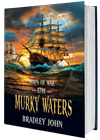
An extended example of Atmospheric Writing is contained in the Prologue of "Ships of War—1791—Murky Waters Rising", the very first scene of action at sea. The chapter was described by Xanadu Book Review as a "masterclass in atmospheric writing":
"Bradley John’s prose brims with evocative imagery, particularly in his descriptions of the sea. The opening scene, in which a ship flounders in a fog as thick as treacle, is a masterclass in atmospheric writing. Similarly, the battle sequences pulse with energy and authenticity, drawing the reader into the clamor and chaos of naval warfare. Every maneuver, every command shouted over the roar of cannon fire, feels alive and immediate..." Xanadu Book Review
READ AN EXAMPLE OF ATMOSPHERIC WRITING
Ships of War—1791—Murky Waters Rising
Prologue
of murky waters...
Skulking about the thickened haze, there lurked the sum of every jack’s most mortal fear. Already whisperings had begun. Nigh upon the rolling banks, the ship of war leisurely made her way, carefully and quietly, the captain long before having ordered the master to fall off. It was expected. The brig was surrounded. Helplessly the crew grieved as the bow became one with the fog. Entangled about the rigging, collecting upon the decks, ever clawing, the wispy clutches of mist haphazardly descended. Bit by bit was the ship consumed. The captain swore under his breath. Yet even for an old salt, there was naught he could muster, except but to stand tall and keep steady their way. He could not recall a thicker pitch of soup, or so he calmly recounted when pressed by the first lieutenant.
A prodigious fog it ever proved, a vile serpent no jack rightly beholding his senses would ever dare conjure. All sight of sail, even the blackened beams barely afore, had wholly disappeared. The eldest jacks had never seen the like. How they stirred within, somewhat disturbed. The vapour ever lingered, wilfully leaking below. It crept upon the planking, it dragged upon the gunwales and oh how it crawled upon the rigging, intent upon devouring whole its prey. Even the nearby reaches of yonder planking all but disappeared, the jacks afar now ghostly apparitions fading to obscurity.
An unnerving disquiet festered upon the quarterdeck and worriedly concerned glances were idly exchanged. Yet whatever the captain felt, he stood as stone, resolute, his withered eyes verily fixed fore and aft, a grim wince barely offering proof of life. To run aground and founder or to hazard and stray unknowingly, or god forbid to have a pirate wickedly bear down and take them a prize, would mean only one thing, the very end. It was a dark thought, a notion ushered with the unsettling certainty of an icy death, cruel and heartless. It was a poor fate indeed, no less a vile torturous demise, no doubt suffered long before the wicked imposition of drowning.
They were officers of the Royal Navy and little else but duty drove their hearts. Britannia ruled the seas. Indeed had she ruled for some years now. And though it was a time of peace, ever did she proffer forth her valiant souls. Into certain peril were they flung, obligated to weather the hazards upon the backs of their own account. No doubt this was one of those times, the fog wisping against the gunwales, the decks darkened fore and aft. Yet such were the hearts of her sons that ever did each and every one clamber to be the first.
The lookout sat worriedly within the masthead, all but shivering, his eyes washed within the eerie calm. He searched hoping for the Channel’s early morning respite. It would never come. The brig had slowed, hardly making way, barely a breath of wind afforded. The fog lingered cruelly, a pale shark circling, enveloping her in a world she ought never have been. It was deathly quiet, the crew barely holding to hope, one hundred odd souls desperately struggling to retain the wits of their vocation.
‘Captain? Sir, just then, I thought I heard something?’ the master worriedly reported. He held fast to the helm as his head tilted, straining to discern the source. ‘Sounded like something, maybe, like a whispering?’
‘Sir!’ the first officer added, now pointing into the misty haze. ‘Hear that? Sounded very much like a hatch squeaking, resonating from larboard, perhaps directly abeam?’
‘Good god! Ring the bell!’ ordered the captain, fearing the worst.
‘Ship ho!’ cried the lookout above. But the captain had already seen her and openly he swore, rueing the tardiness of his man atop. His good eye remained upon the fog, the other reserved for the wrath he would later lay upon his lookout. It was an unforgivable act, perhaps even an unpardonable sin and the jack atop knew it, much to his chagrin. A tolerant first officer might argue that hardly was the man to be blamed. After all, such was the soup, no less a dragon’s breath, the murk utterly masking the outside world. It would be an argument sorely lost.
The entire weather deck scrambled, the eyes of each officer steadily fixed upon the looming presence. Verily from the banks the fog parted and a great darkened shape emerged. The captain expected the worst, a crazed bull charging from the woods and there they sat, limping, nowhere to go. He at once recognised her, a large brig moving quite briskly, but curiously it was not her bowsprit he first beheld. Rather had she turned, now safely running abreast, which is to say, parallel with their heads equally advanced.
‘Thank god!’ the master’s mate cried, an experienced hand who once before had suffered his ship to be rammed. Yet jubilation turned to horrid dread. The whites of his keen eyes widened and a paralysing consternation took hold. A row of cannon bore directly, darkened sentinels protruding the gloom. Afore the ghostly ship one by one the long snouts came to bear, evil slits bulging within the vapour, emerging from the hatches worse than hounds curiously sniffing their prey. About each barrel the mist haplessly wafted, the heaving snorts of a great herd of wild beast, moreover a bevy of seething demons readying to spark. ‘Captain, sir!’ he gasped. ‘She’s a pirate!’
The report came in a rolling wave, one shot sent meticulously after the other. It was a moment in time hopelessly dragged, a deafening myriad of mayhem, a horror truly attesting the madness of men. Into the abyss all spoken word descended, consumed and strangled, forever muffled as man and ship despaired within the relentless fury of many an eight pound shot. The decks trembled, desperately shuddering as the iron passed easily through her timbers. Each fiery shot laid true its waste, eventually stifled within the bowels of her hull. She splintered from fore to aft, chips flying violently amidst the chaos. A terrible confusion reigned, holier than a winter’s storm bearing wildly upon a festering sea. Indiscriminately did men fly, hideously plucked from their stations, some thrown directly into the sea whilst others soaked red their dye upon the decks. Amidst their scattered cries the storm all but gathered, fearing never to relent. The thunder ever growled, blazing sparks promoting the might of every thump. With every flash thereafter tallied a horrid boom, attesting to each murderous strike the fury within. Blow after blow continued, felt deep within the hull and the ship rocked forcibly, helpless to stay the undeniable might of each unwanted incursion.
As suddenly as it had begun, the rattling spray of hail ceased and profoundly did the din of battle subside. From the smoke she limped, battered, left lying utterly helpless, a winged duck on the pond stranded. Her planking continued to ache, grumbling and whining in the weakness of its offended state, the ship hopelessly rent. Yet the masts somehow still held, even the canvas. It was a mocking curiosity, a feeble whim to those with breath still shaping their lungs. Storming aboard in torrents the sea indignantly washed the decks, the ship fearing to list as the icy hands of the beast swelled upon each and every jack. Oh how the meandering flood slithered through the timbers, a great serpent wrapping its prey, strangling its coil. Cruelly did it wring her, the ship filling until at last the hull surrendered under the final weight of its relentless grip.
Still perched above within the masthead the lookout helplessly cried, the ship gently slipping into the deep, the product of his ineptitude laid verily before him. The jack’s every being, his every effort, scrambled in vain to somehow avoid the inevitable. Hungrily the seas clawed the heights of the mast, eager to seize its prize. He swore one last time as the chill first gripped him. His breath stiffened and a cruel silence ensued. And so from god’s earth did he and his ship hopelessly depart, almost as if they had never been.
Arrested aimlessly upon the sea the mist toiled in silence, creeping and crawling, forever searching. Into the depths of its banks did the ghostly brig slither, a hound from hell slipping idly back into the belly of her master’s domain.
READ AN EXCERPT OF BATTLE FROM MURKY WATERS RISING
Ships of War—1791—Murky Waters Rising
The following is a short excerpt from deep within the storyline, whereupon battle has been joined...
Holt beheld the incoming broadside standing tall upon the quarterdeck. In the first moments he regarded the undeniable sight of smoke instantly puffing from the ships yonder, silently though, for the sound had not yet fully travelled. He was thereafter borne of a singular mind, assuredly a mind to which all familiarity with the outside world now fell lost. It certified within him a suffering never before deemed imaginable. It was a hostility he would soon not forget, such was his boyhood innocence.
Noted instantly were a great many astonishing sounds, all racing to rupture the virtue of his lobes, an overall resonance seemingly strange and without a doubt wholly outlandish. Having never been on the receiving end of such a broadside, it openly gave him pause. The whistling tunes aloft seared the sky and oh how they chanced to inflict the gravest of thoughts, the wind of the enemy's shots whizzing as they trespassed upon the ship. The scene descended upon him most abruptly, the horrendous tearing of sails overhead, the ripping of canvas crying aloud as the weight of spars sought to claw them down. Splinters upon bulwark and gunwale haphazardly flew, mimicking a violent winter's storm, more furious than even a hundred wood choppers madly serving their axes.
All about the planking, indeed immersed within the depths of the structure, Agamemnon shuddered and trembled, the penance of each shot hurried from the ship. The roaring of cannon reverberated within his chest, almost as if he were in fact somehow the barrel itself, the hum of each shot grabbing wickedly at his heart. The deafening turmoil within sought to impose a hideous most disturbed feeling and immediately he felt inclined to be uncontrollably ill, the vile gurgling about his abdomen finally seeping the sanctity of his throat...
Commonly could Holt discern explosions from all parts of the ship, the ensuing chaos distinctly mingled in the distance with the thumping bang of yonder French cannon. Here and there could he hear shots striking the sides, the ricochet of balls within as they forced their way through the oak, ever refusing to resist. Within the smoke, beneath the hail of iron, it was as if the ship had been levied by a thunderous tempest lighting fury upon her, randomly strewing the fallen into weeping pools of its bloodied wrath. It was a scene which very much sought to arrest his entire being, the chaste adolescence beholden within now very much befallen, the eyes of a young soul ever youthful no more. He attended his duty nonetheless, an indescribable confusion surging about the decks as he found himself giving orders almost as if he was the only body still standing. A jack not thirty feet before him stood attending his gun, only a moment later to instantly disappear with nothing apparent striking him. Another jack stumbling had lost his leg, hopelessly fumbling to tie off the stump with a handkerchief. The hand of god breached the ship and oh how every man prayed as the carnage fell haplessly upon them. Yet in the next moment, within the despair, unexpectedly and seemingly all at once, almost without warning, indeed without the slightest prejudice as it is with all great storms, was Agamemnon engulfed in compelling silence. Shots on both sides had been spent and the race to reload began. Only the cries of the wounded and the sporadic squawking of some ragged gulls served to remind Holt that he was still the first officer aboard a ship of war and not some spirit haplessly wandering the afterlife.
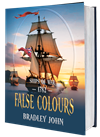
READ AN EXCERPT OF BATTLE FROM FALSE COLOURS
Ships of War—1782—FALSE COLOURS
The following is a short excerpt from deep within the storyline, whereupon battle has been joined...
Within Hinchinbrook carnage descended, shots from all directions, timbers and canvas impaled, a tornado of chips flying. Upon the upper deck, spray upon spray of iron crashed heavily, violating the tops, wicked incursions difficult to stomach. Remorselessly was she shredded, cruelly, jacks torn from their stations, blood soaking the spots they once stood. To account the act simply as “war” was to ride with the beast, to see one’s soul forever tainted, lost.
Into the lap of the netherworld Hinchinbrook sailed, into a deafening maelstrom where men fell crippled, maimed, mutilated, some even violently ushered from the ship far into the darkened sea. Bodies lay strewn, piling. Those with breath writhed, bemoaning their afflicted plight, only to be drowned out by the thundering roar of cannon suddenly barking. Much of the bulwark had been reduced, the entire length of the railing on one side in tatters. Strewn upon the planking a tragedy of waste and debris lay littered, soon to be wildly jettisoned as the barque careened, her deck tilting. The bodies of brave men followed, tumbling, some without hope, some with breath still in their lungs.
Adams’s gaze hovered aloft, the canvas taking the brunt of the first few shots. With each new whump and pop, so announced was the start of Hinchinbrook’s end. She had swallowed more than her fair share, shot upon shot boring great holes, almost as if some beast had thundered through. Canvas hopelessly burnt, charred and decrepit, fluttered helplessly as it rode the breeze, smoke trailing as each piece fell extinguished in a watery demise. Sails flapped untended, left to their own devices, wildly quivering. Uncontrolled and drawn, the wings of the barque split apart, ripping, finally torn to shreds. Timbers hewn were cast into the sea, the echo of deadened oak crying foul as a storm of splinters flew the span of the deck fizzing. Shot upon shot trespassed through the tops, jacks in the masthead thrown to the scavenging of sharks below. Bludgeoned were spars, battered were masts, chipped and charred, carved and gouged, weighing precariously as their state weakened.
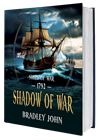
READ AN EXCERPT OF BATTLE FROM SHADOW OF WAR
Ships of War—1782—SHADOW OF WAR
The following is a short excerpt from deep within the storyline, whereupon battle has been joined...
The cannon upon Phaeton let go, a full barrage, one thump meticulously levied after the other. Cooper could only delight as he accounted the din, a rolling broadside. It seemed Douglas was sharp, the man he had thought him to be. With the wind on their back, he could wholly imagine how seamlessly Phaeton had slipped upon États de Bourgogne, only to audaciously bear away before even a shot might be returned.
Cooper dutifully counted each report, ever lost within a thunderous volley of insistent huffs. It was a great storm swelling, a faraway clamour, each shot furiously echoing within the mix of a tempest intensifying. The harbour bore a skyline of smoke, dull and dark. Yet beckoning within, lurking, a striking of sparked fire in fury rose. The rumbling attested the swelling absence of calm, a chorus of faint sirens whistling the approach of heightened foes. From far away the shrill loomed, ever increasing, a flock of screeching predators swooping upon its prey. Great thumps echoed within the tops, the whumping puff of the canvas exhaling as the iron trespassed upon the great wings. Thrashing and pitching, the shots burst, unrelenting, the indignity of each ball daring to harass the heart of the beast. The tally cruelly reverberated, a crescendo imposed upon each and every inch of the deck, finally drowned within the stillness of the sea. As the balls effortlessly passed, the canvas departed, shredded, crying aloud as sheets randomly tore under the tautness of the breeze. Hazarded upon the oaks, splinters erupted. In kind the timber hideously wailed, the great logs forking the exposed arms, yards and stays, rods and ropes, all hopelessly rent. Oh how she ever groaned, whining, a beast in despair until finally the failing cracks horrendously sought to give way. A man fell screaming into the sea, most likely a lookout from the masthead. They never saw him rise. Piled upon his back followed the weight entire of the tops, chasing madly into the depths. It was a deluge of debris, an entanglement of wreckage scored amongst smatterings of lumber and smouldering canvas. To the harbour it all plummeted, no less a great sized hailstorm sweeping a winter’s day.